
Furniture of America
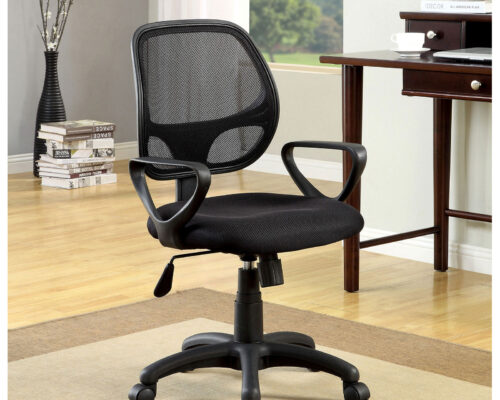
Furniture of America Sherman Transitional Black Office Chair
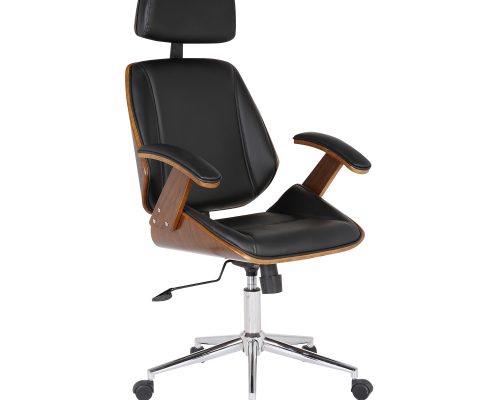
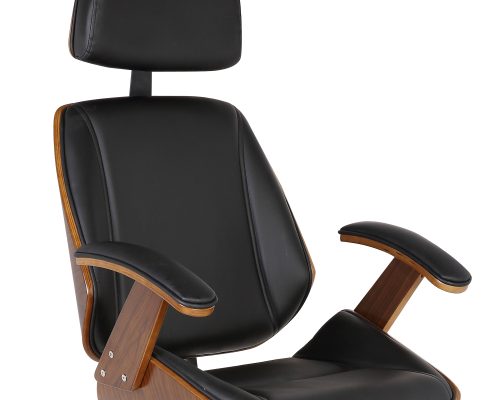
Armen Living
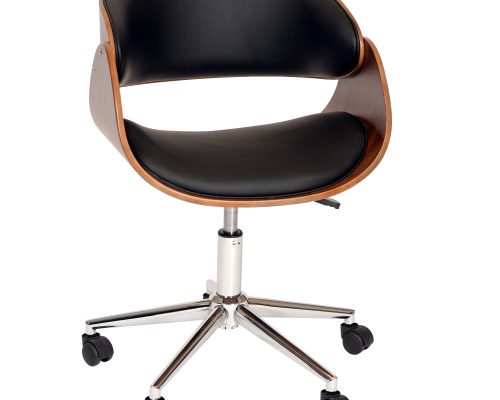
Armen Living


Armen Living

Frequently Asked Questions
An ergonomic office chair is designed to support the natural curve of your spine and adapt to your specific body mechanics. To be considered truly ergonomic, a chair should feature adjustable seat height, adjustable lumbar support, adjustable armrests, and a tilt mechanism that allows you to recline while keeping your feet flat on the floor.
Standard office chairs are generally rated for 4 to 6 hours of continuous use. If you work from home full-time and sit for 8 or more hours a day, it is crucial to invest in a high-end ergonomic task chair or an executive chair designed for “24/7” or “intensive” use to prevent back strain and fatigue.
The best material depends on your environment and usage. Mesh chairs are the most popular because they are highly breathable, keeping you cool during long work sessions. Genuine leather offers a premium, executive look and durability, while high-density foam upholstered in performance fabric offers plush, traditional comfort.
Standard hard plastic casters are designed for carpet and can scratch or dent hardwood, laminate, or tile floors over time. If you have hard floors, you should either purchase a protective plastic chair mat or replace the standard wheels with soft polyurethane “rollerblade style” casters designed specifically to glide safely on hard surfaces.
A task chair is built for active work; it has a lower back, a smaller footprint, and focuses on high adjustability to support typing and computer work. An executive chair is larger, features a high back, thick padding, and premium materials (like leather), prioritizing commanding aesthetics and plush comfort over granular ergonomic adjustments.
Most office chairs ship “Ready to Assemble” (RTA) in a single box to reduce shipping costs. Assembly is typically straightforward and requires no extra tools, usually involving inserting the casters into the base, attaching the pneumatic cylinder, and bolting the seat and backrest together using the included Allen wrench.
Most office chairs have a large, cylindrical knob located directly under the center of the seat pan. Turning this knob clockwise increases the tension (making it harder to lean back), while turning it counterclockwise decreases the tension (making it easier to recline). Adjust the tension so you can recline smoothly without feeling like you are falling backward.
A waterfall seat edge is a design feature where the front edge of the seat cushion slopes downward slightly, resembling a waterfall. This ergonomic design reduces pressure on the back of your thighs and behind your knees, promoting better blood circulation to your lower legs during long periods of sitting.
While not strictly necessary, adjustable armrests are highly recommended for computer work. Properly adjusted armrests support the weight of your arms, relieving strain on your shoulders and neck. However, if you have a narrow desk or need to slide the chair completely under the desk when not in use, you may prefer an armless chair or one with flip-up arms.
A standard home office chair is typically tested and rated to hold 250 pounds safely. If you require a higher weight capacity, look for chairs specifically labeled as “Big and Tall” or “Heavy Duty,” which feature reinforced steel frames and heavy-duty gas cylinders designed to safely support 350 to 500 pounds.