
What Is an Electric Fireplace and How Does It Work?
Apr
There’s a specific kind of evening most people know and crave. Cold outside, lights low, something playing in the background. You want warmth, not just the heat kind, but the kind that changes how a room feels. That used to mean a wood-burning fireplace, a gas line, or at minimum, a very convincing candle situation. Now? A lot of people are rethinking that entirely.
What is an electric fireplace, exactly? It’s a heating unit that mimics the look and feel of a traditional fireplace without any combustion, venting, or fuel. No chimney. No gas line. Just electricity, some seriously clever LED technology, and in most cases, a heating element that actually warms the room. They’ve been around for a while, but the newer generation looks genuinely good. Not “acceptable for an apartment” good — actually good.
The mechanics behind the flame
How does an electric fireplace work sounds like a simple question, right up until you look inside one.
The flame effect has nothing to do with actual fire. In most units, it’s a combination of LED lighting and reflective elements. Light hits rotating mirrors or refraction panels, shifts as they move, and creates that flicker you read as a flame. It’s not trying to be perfect—it just needs to be convincing enough that your brain fills in the rest. And it usually does.
Some higher-end models push this further. They add a fine water vapor mist that the light passes through, which gives the flame a bit of depth. It moves differently, looks less flat, and starts to feel less like an effect and more like something physical.
The heat side is more straightforward, but there are two different approaches.
Fan-forced systems pull in cool air, pass it over a heated element—typically made from materials like chromium or nickel—and push that warm air back into the room. It’s direct, quick, and works well for smaller spaces, usually up to around 400 square feet. Bedrooms, home offices, smaller dens.
Then there’s the infrared electric fireplace, which works on a different principle. Instead of heating the air, it emits infrared light that warms objects and people directly. Similar to how sunlight feels on a cold day. A quartz bulb generates that heat, coils help spread it evenly, and a reflector pushes it outward into the room.
You feel it faster. The warmth settles differently. And because it’s not constantly moving air around, it doesn’t dry things out as much.
These units can handle larger spaces—closer to 1,000 square feet—so they’re not just a variation, they’re a different use case.
Both types run on standard household electricity. Most plug into a regular 120V outlet, no special setup needed. That’s really all there is to it.
Finding the right fit for your space
The best electric fireplaces for living room use come down to a few questions worth thinking through before buying.
How big is the space?
Fan-forced units work fine up to about 400 square feet. Push past that, and you’ll want infrared, or you’ll just be running the unit constantly without the room ever feeling properly warm.
Is this primarily about heat or ambiance?
Because you can run the flame effects completely independent of the heater on most modern units. Guests in July can still get the fireplace experience without the room hitting 80 degrees. If the flame itself is what you’re after — the flicker, the depth, the glow — a Dimplex electric fireplace is worth looking at closely. Their flame technology is proprietary and honestly hard to argue with. The light moves in a way that most other units just don’t replicate.
Do you want it to disappear into the wall or make a statement?
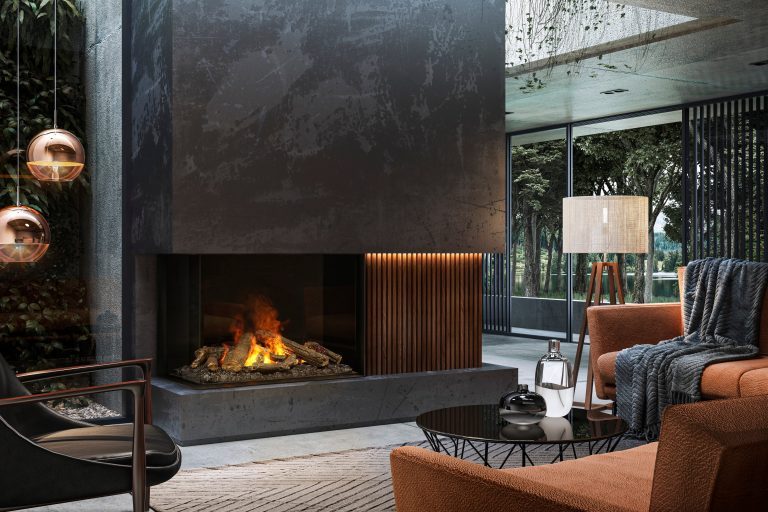
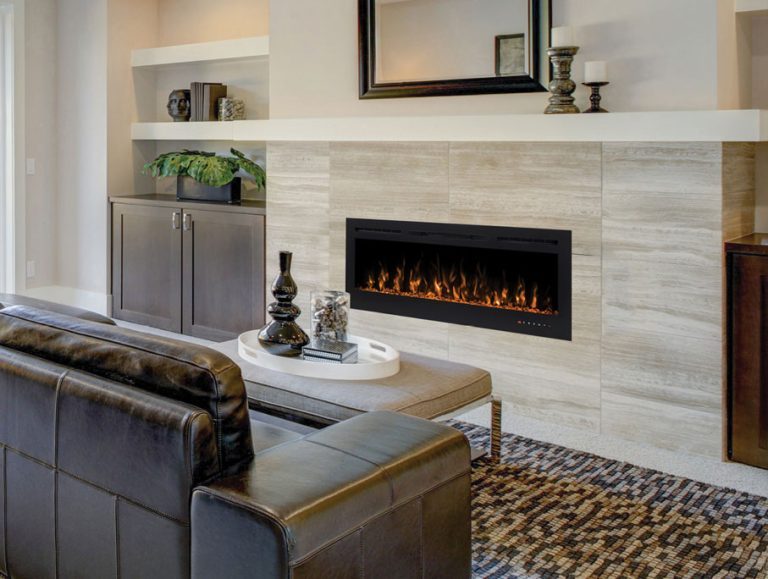
A recessed built-in electric fireplace with a thin frame disappears architecturally. A freestanding mantel unit becomes furniture. A wall-mounted electric fireplace splits the difference; it has presence, but it’s not dominating. Modern Flame electric fireplaces sit squarely in this category — clean lines, minimal bezels, designs that look like they belong in the room rather than got dropped into it. They’re a solid option if you care as much about the aesthetic as the heat output.
And then there’s the infrared question. If anyone in the house has allergies, sinus issues, or skin that goes dry in winter, the humidity preservation that comes with infrared electric fireplaces is a real advantage over fan-forced models. It’s not a minor thing. Forced-air heat, ANY forced-air heat, strips moisture from the room over time. Infrared doesn’t.
What about outdoor spaces?
People always ask if they can just take their indoor unit out to the patio for a movie night. Don’t. You’ll fry the electronics the second the humidity hits it. If you’re trying to heat an outdoor space, you need something built for the elements. A Bromic Portable Heater or a wall-mounted outdoor unit is the move here. They’re designed to survive the rain and wind while actually throwing enough radiant heat to keep you comfortable on a deck. For outdoor heating, Bromic Heating is basically the industry standard. They don’t just blow hot air around; they use directional infrared heat that hits you where you’re sitting, which is the only way to stay warm when there’s a breeze.

Installation
With a traditional fireplace, you’re locked in. The thing is built into the house, and moving it is a renovation project. Electric units don’t work that way.
For example, a wall-mounted electric fireplace goes up with wall anchors, no hiring a contractor is required in most cases. They sit flush or slightly recessed, depending on the model, and they read as architectural detail more than an appliance.
A built-in electric fireplace goes deeper, literally recessed into the wall itself or framed into a media wall. More involved to install, but the end result looks like it was designed that way from the beginning.
Neither option needs venting. No exhaust. No carbon monoxide concern. The surface of the unit stays cool to the touch, which is an important detail if you have kids or pets around (as both are unpredictable). Most models also include automatic shut-off features for overheat protection. Safety isn’t something you have to think much about with these.
The part people don’t think about until after
Running an electric fireplace costs roughly 12 to 15 cents per hour at average electricity rates. For most households, that’s meaningfully cheaper than running a gas fireplace, and it’s dramatically cheaper than actually heating with central HVAC when you could just zone-heat the room you’re using.
Zone heating is what a lot of people end up doing — keeping the central thermostat lower and using the fireplace in whatever room is actually occupied. The math usually works out in their favor.
What nobody tells you is how much the ambiance factor changes how you use a room. A fireplace, even an electric one, reorganizes a space around itself. It becomes the focal point. People sit closer to it. Conversation changes. It sounds a little abstract until you’ve experienced a room that has one versus the same room that doesn’t.
That’s not marketing copy. It’s just how rooms work.
Maintenance reality
The best thing about going electric is the lack of “work.” You aren’t scooping out ash. You aren’t calling a chimney sweep every year. You aren’t worrying about spiders living in your wood pile.
Every once in a while, you might need to take a vacuum attachment to the intake vents to keep the dust out, or wipe down the front glass with a microfiber cloth if it gets fingerprinty. If you have a water-vapor model, you’ll need to refill the tank with filtered water. That’s it. Most of these use LEDs that are rated for about 50,000 hours. If you ran it for five hours every single night, those lights would last you over 25 years.
Conclusion
An electric fireplace isn’t trying to replace a traditional one in the purist sense.
It’s solving a different problem.
You get heat where you need it. You get the look of a fire without committing to everything that comes with it. And you can install it without turning your home into a construction site.
That’s why, for a lot of people, it stops being a compromise and starts feeling like the smarter choice.
Not because it does more.
Because it asks for less — and still gives you enough to make the space feel right.
Need Help?
An electric fireplace is a heating appliance that mimics the look of a real fire without burning wood or gas. It uses electricity, LED lights, and visual effects to create realistic flames
Electric fireplaces use LED lights and mirrors to create flame effects, while a built-in heating element warms the air and a fan distributes heat into the room.
No, electric fireplaces do not produce real flames. They use light effects and reflections to simulate the appearance of fire safely.
Yes, most electric fireplaces include a heater that provides adjustable warmth, and many allow you to use the flame effect without heat.
Electric fireplaces can heat small to medium-sized rooms, typically up to a few hundred square feet depending on the model and power.
No, electric fireplaces do not require a chimney or vent because they do not produce smoke or gases.
Yes, electric fireplaces are generally safe as they have features like automatic shut-off and cool-to-touch surfaces, making them safer than traditional fireplaces.
Yes, most models allow you to run the flame effect independently, so you can enjoy the ambiance without heating the room.
Electric fireplaces are considered energy efficient because they convert most electricity into heat and do not lose energy through ventilation like traditional fireplaces.
Electric fireplaces can be installed in living rooms, bedrooms, or even mounted on walls, as they only require a standard electrical outlet.