
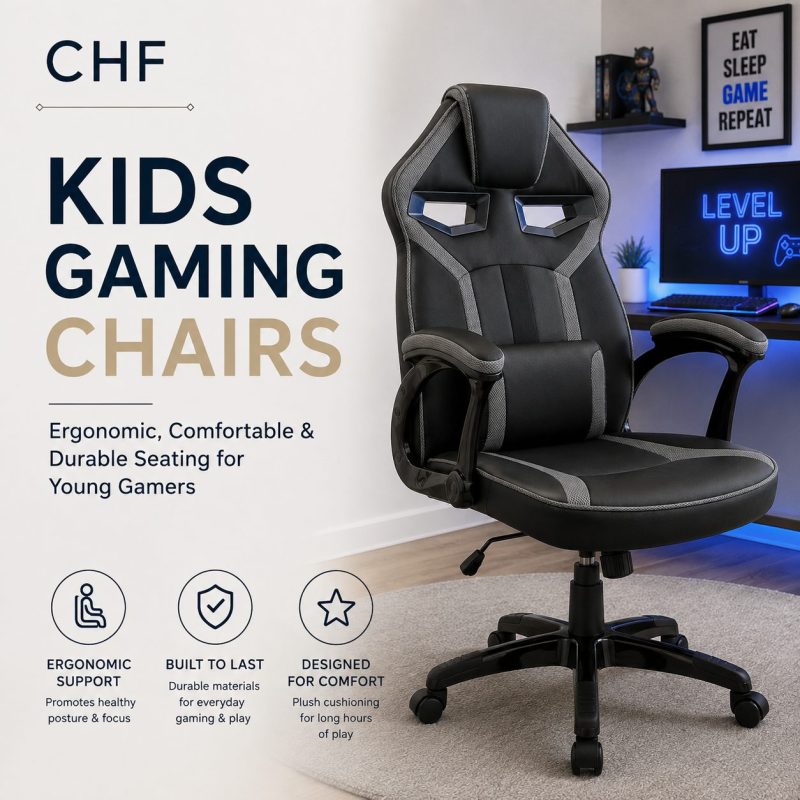
Kids Gaming Chairs: Ergonomic, Comfortable & Durable Seating for Young Gamers
Aug
Kids don’t sit properly when they are gaming. That’s not a criticism; it’s just what happens when a nine-year-old is three hours deep into a game, and their spine is the last thing on their mind. They twist sideways, tuck a leg under themselves, lean forward until their nose is nearly touching the screen. A dining chair or an old office chair inherited from a parent’s home office wasn’t built for any of that. A kids’ gaming chair was.
Kids’ bodies are still forming, and that changes things. Habits built sitting at a desk or a gaming setup at age eight don’t just vanish at eighteen. They stick around, for better or worse.
Posture habits start earlier than most parents realize
Children spend plenty of time sitting, whether they are gaming, studying, watching videos, or working on a hobby. The way they sit during those hours can become a habit, which makes proper support worth considering from an early age.
An ergonomic gaming chair for kids can provide that support with features such as a shaped backrest, adjustable armrests, and lumbar support. These details help a child sit in a more supported position instead of leaning forward or sinking into the seat.
The goal is not to make sitting feel rigid or overly formal; a well-designed gaming chair should simply make it easier for a child to sit comfortably and maintain a better posture while they play. For growing kids, that kind of everyday support can be useful during longer gaming sessions.
Sizing is where most chairs get it wrong
A smaller version of an adult chair is not automatically the right size for a child. A gaming chair for kids needs proportions that suit a smaller frame, including the seat depth, armrest height, and shape of the backrest.
When a chair is too large, a child may have trouble sitting back against the backrest or keeping their feet comfortably supported. A chair that is too small can become uncomfortable as they grow. In either case, the chair is not providing the support or comfort it should.
Size also affects how much space the chair takes up. Adult gaming chairs can have wide seats, large bases, and substantial padding. A kid-sized design generally has a smaller footprint, which can make it easier to fit into a bedroom, study area, or gaming setup without crowding the room.
Durability isn’t optional with kids involved
Kids are hard on furniture. Bouncing, spinning, tipping the chair back on two legs when they know they shouldn’t… it’s just part of the deal. A durable gaming chair for children has to hold up under all of it without the seams pulling apart or the base wobbling loose after just a few months.
Details such as reinforced stitching and a sturdy metal frame can make a difference here. The upholstery deserves some thought, too. Faux leather is easy to wipe clean, which can be useful when snacks and drinks are part of the gaming setup (and with kids, they always are). Fabric can also be comfortable, but spills and marks may take more work to clean.
Carefree Home Furnishings carries a range of kids’ gaming chairs built with exactly this kind of daily wear in mind, not delicate pieces meant to be admired from a distance, but ones meant to actually get used.
The comfort features actually worth paying for
Not every feature on a gaming chair earns its keep. Some are just there to look good in product photos. But a handful genuinely change how a chair feels after an hour or two.
Adjustable recline is one. Being able to lean back slightly during a loading screen or a cutscene isn’t a luxury; bodies naturally want to shift position, and a fixed-angle backrest fights that instinct. Padded armrests matter for anyone using a controller for long stretches. Breathable upholstery keeps things from getting uncomfortably warm, which ruins a gaming session faster than almost anything else.
The Bender Adjustable Faux Leather Gaming Chair combines several practical features, including a 17–21-inch adjustable seat height, padded armrests, 360-degree swivel, adjustable tilt, high-density foam cushions, and a reinforced 5-star base.
What actually separates a good chair from a great one
The best gaming chair for kids usually comes down to three things done right, rather than a long list of extras. Get the size range correct for the child’s age and height. Prioritize real back support over flashy add-ons like built-in speakers or LED trim (they are fun, sure, but not what keeps a kid comfortable three hours in). And check that the base and wheels are rated for daily use, not occasional sitting.
The Aspect Racing-Style Gaming Chair is a good example. Its racing-inspired shape gives it the look many young gamers like, while the included lumbar support pillow adds support where it is needed.
Conclusion
A gaming chair won’t fix screen-time arguments or homework avoidance. It won’t do any of that. What it can do is provide a more supportive and adjustable seat for the hours a child spends at a desk.
Carefree Home Furnishings’ kids’ gaming chair collection focuses on the practical details that matter for everyday use, including appropriate sizing, durable construction, and supportive designs. Those are the features to consider when choosing a chair a child will use regularly.
Most kids’ gaming chairs are designed for children roughly ages 5–12, with sizing based on seat depth, armrest height, and backrest shape rather than age alone. It’s best to check the chair’s size range against your child’s height before buying.
A gaming chair built for kids typically offers more targeted support, including a shaped backrest, lumbar support, and proportions suited to a smaller frame, compared to a standard desk or dining chair that isn’t designed with a child’s body in mind.
With features like adjustable recline, padded armrests, and breathable upholstery, a well-fitted gaming chair can support longer sessions more comfortably than a fixed, non-adjustable seat, though breaks are still recommended for young gamers.
Look for reinforced stitching, a sturdy metal frame, and a base rated for daily use. Faux leather upholstery is generally easier to clean than fabric, which matters given how often kids use these chairs.
Toddler and younger-kid gaming chairs are sized smaller with shorter seat heights and depths, while chairs for older kids (8–12) have larger proportions to match their growing frame — sizing is the main differentiator, not features.