
Poufs vs. Ottomans: What’s the Difference and Which Is Right for Your Space?
Aug
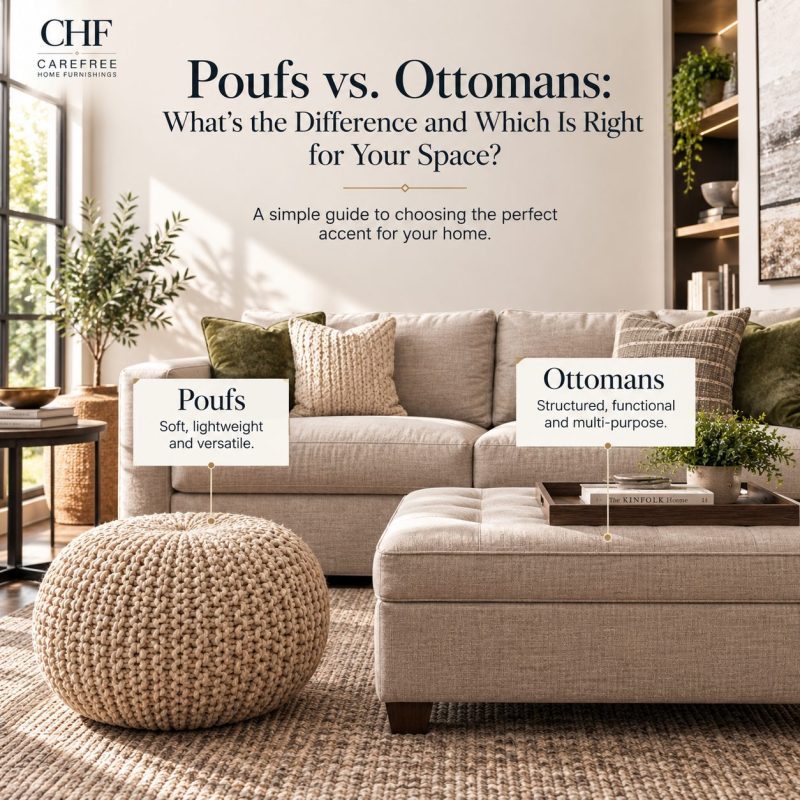
A pouf vs ottoman comparison mostly comes down to what is underneath. A pouf is soft all the way through, usually filled with materials such as foam, fiber, or beans, so it compresses when you sit on it. An ottoman has a solid frame, often made from wood or metal, which gives it more support and lets it work as a footrest, extra seat, or storage piece. Once you know the difference in construction, choosing between the two becomes much easier.
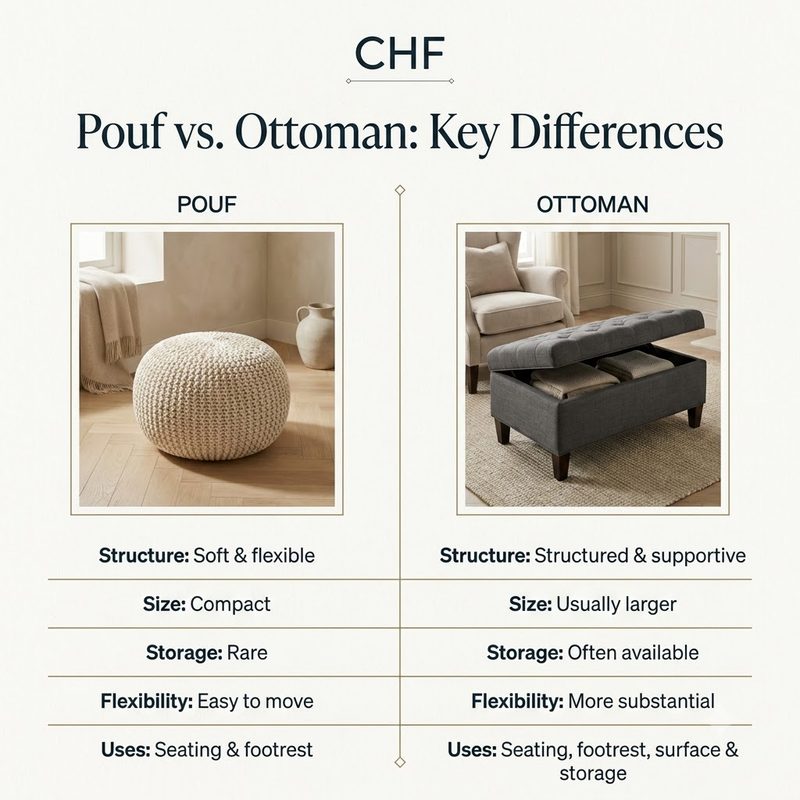
| Feature | Pouf | Ottoman |
| Size | Compact, low profile | Tends to be larger and bulkier |
| Storage | Very rare | Common, via hinged or removable lids |
| Material | Knit, leather, fabric over stuffing | Upholstery over wood or metal framing |
| Use case | Quick seating, mobile footrests | Coffee tables, heavy-duty seating, hiding clutter |
What Is a Pouf?
A pouf is basically a plush cylinder or cube with nothing holding its shape but stuffing. You can tuck one under a console table and pull it out when guests need a spot to sit; that’s really the whole pitch.
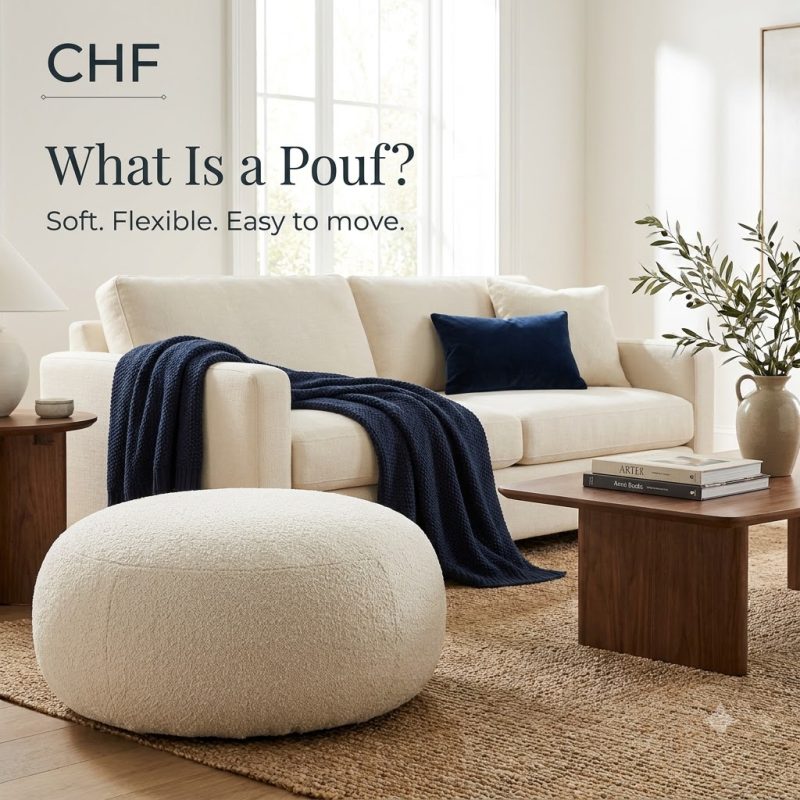
They weigh almost nothing, which can be more useful than it sounds once you own one. Knit poufs, leather poufs, Moroccan-style poufs stitched from wool, they all follow the same basic idea: soft seating that can move around the room as needed. No legs, hardware, or assembly are required. Storage is uncommon because there is no frame to build a compartment into, although some fabric poufs do have zippered tops for storing a blanket.
What Is an Ottoman?
An ottoman is built rather than stuffed. A wood or metal frame sits beneath the upholstery, giving it the support to hold weight in ways a pouf cannot. You can use one as a footrest, or place a tray on top and use it in place of a coffee table. A bench-style ottoman can even give two or three people an extra place to sit during movie night.
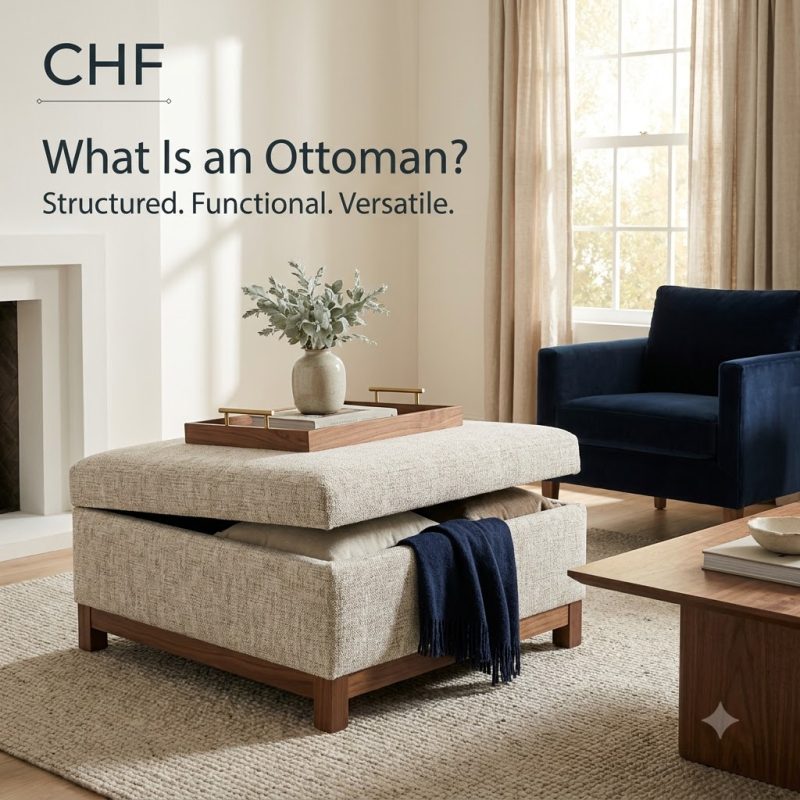
That same frame is why storage is even an option. Lift the padded top and there’s a cavity underneath for throw blankets, remotes, kids’ toys, whatever tends to pile up in a living room. An ottoman storage bench for bedroom use works the same way at the foot of the bed, holding extra linens or off-season clothes without eating closet space.
Some ottomans have tufted tops and nailhead trim that give them a more traditional furniture look. Others are simple and boxy, designed to blend into the room rather than stand out.
Pouf vs. Ottoman: Key Differences
The primary difference between pouf and ottoman designs boils down to what holds them up. Poufs flex under your weight because they lack a rigid skeleton. Ottomans maintain a strict shape because a hard frame fights back.
Weight capacity tells the story pretty fast. Flop onto a pouf, and it squishes down. An ottoman stays totally put. That firm support lets an ottoman hold a drink tray without spilling your coffee, while a pouf will just dump it on the rug.
Storage follows the same basic logic. Most poufs lack a built-in compartment, whereas some ottomans are designed with storage under a removable or hinged top. Pillows, blankets, throws, or other items can stay tucked away without adding another storage piece to the room.
Cost varies wildly. Still, a basic floor cushion usually runs cheaper than an entry-level ottoman; especially when you start pricing out storage models with heavy steel hinges and reinforced corners.
Which Is Better for Small Spaces?
Poufs generally win in small areas because they are compact, low-profile, and lack sharp corners. You can shove them under a desk or into a tight space easily when you need the floor back. Ottomans work too, provided you buy one scaled down for your exact square footage.
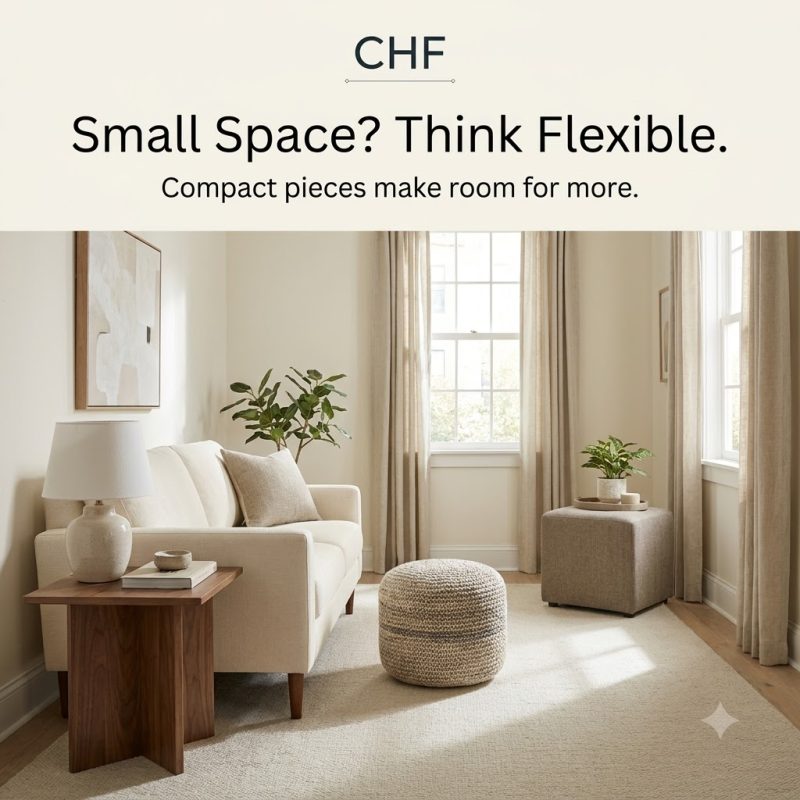
Tight apartments and cramped reading nooks demand things you can shift around. One-handed lifting is a massive perk here, and that is where the pouf really takes the lead. A square or round ottoman can absolutely fit into a small room, especially if it is doing double duty as a coffee table. Just know it will always eat up more floor space and visual bulk than a simple stuffed cushion.
Which Offers More Storage?
Ottomans, without much competition. The frame underneath is what makes a hidden compartment possible, and most storage ottomans are built around exactly that feature.
An ottoman bench for living room storage is usually where this shows up first: the lid doing double duty, hiding clutter while giving you a place to set a drink. Bedrooms lean on the same mechanism. A bedroom ottoman bench at the foot of the bed holds linens or seasonal clothing, and looks like intentional furniture rather than a plastic bin shoved in a corner.
Poufs vs. Ottomans: Which Should You Choose?
Choose a pouf when you want something soft, compact, and easy to move around. It is a useful piece for flexible seating and casual foot support, especially when the room needs to change from one use to another.
Choose an ottoman when you want a more substantial piece that can become part of the room’s furniture arrangement. The added structure gives you more options, from storage to extra seating to a stable surface for a tray.
And you do not have to treat it as an either-or decision.

A room can easily have both. One may stay beside a sofa and handle everyday use, while the other moves around whenever the room needs another seat or footrest.
Start with what the space is lacking. Extra flexibility points toward a pouf. More structure or hidden storage may point you toward an ottoman. Once that is clear, the shape, material, and size become much easier to narrow down.
The right piece should solve a real problem in the room. It should not create another place to put something simply because the furniture looked good in the showroom.
A pouf is soft and filled with materials such as foam, fiber, or beans, while an ottoman has a solid wood or metal frame underneath. Poufs are flexible and easy to move, while ottomans offer firmer support and can provide features like storage or extra seating.
A pouf is generally better for small spaces because it is compact, lightweight, and easy to move or tuck away when not needed. A smaller ottoman can also work well, especially when it serves multiple purposes, such as a footrest or coffee table.
An ottoman offers more storage. Its solid frame can include a hidden compartment beneath a removable or hinged top, making it useful for storing blankets, pillows, toys, linens, or other items.
Yes. A firm ottoman can be used in place of a coffee table by placing a tray on top. Its stable surface makes it more suitable for holding drinks and other items than a soft pouf.
Choose a pouf if you want something soft, compact, flexible, and easy to move. Choose an ottoman if you need more structure, extra seating, a stable surface, or hidden storage. You can also use both if your space benefits from their different functions.